

Editorial Workflows & Approvals
An SEO Content Workflow From Keyword Cluster to Reviewed Draft
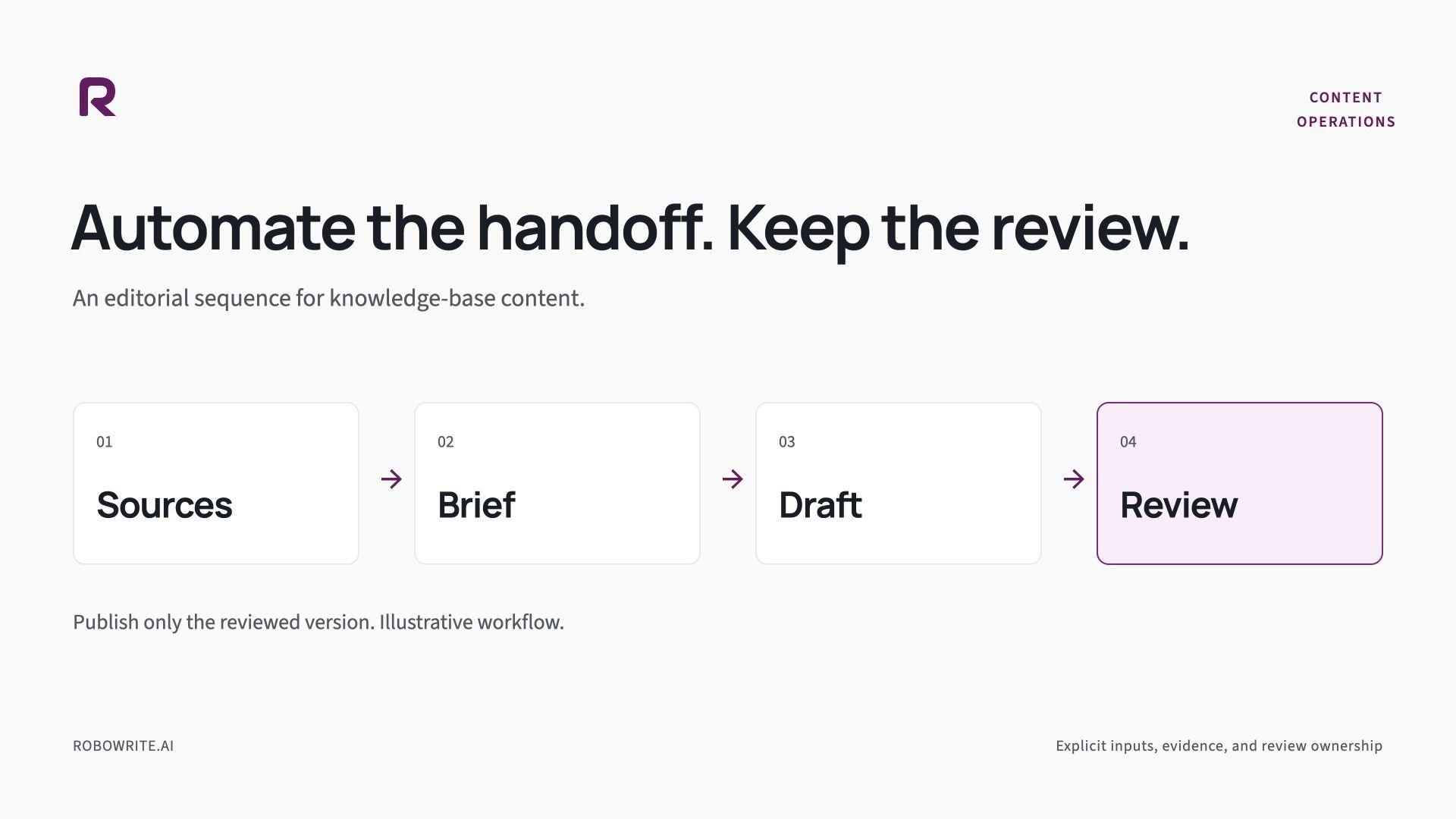
Connect keyword clusters, a focused brief, source research, a Content Kit, drafting, and editorial review in a practical SaaS content workflow.
Follow practical content operations guides with clear inputs, ordered actions and verification steps for planning, writing and publishing.
Connect keyword clusters, a focused brief, source research, a Content Kit, drafting, and editorial review in a practical SaaS content workflow.

Lean B2B SaaS marketing teams should set content pillars before first draft work begins. Your team may have limited headcount, a long buyer journey, and constant pressure to clarify positioning. A pillar plan gives every SEO post a job: answer a buyer question, reinforce an area of expertise, and…
Content pillars give your content marketing a repeatable structure: choose a few topics your audience needs help with, create a useful hub for each one, and support every hub with focused articles. Instead of chasing disconnected post ideas, you build a

Before you write SEO content, extract brand voice from client URL pages that show how the business speaks to real customers. Sample several page types, capture recurring language patterns, and turn those patterns into testable rules. This approach prevents generic copy and gives your team a…

A b2b content marketing strategy helps you publish useful SEO content on a predictable schedule without treating every article as a one-off project. For a small team, business owner, or freelance marketer, the practical goal is simple: choose topics that

Shipping one blog post each week is easier when the team shares a single checklist. This post is a short operating list you can copy into your project tracker. Before drafting Pick one audience problem, not three Name the primary keyword the page should

A practical editorial workflow has four stages: brief, draft, review, and publish. Each stage needs an owner, a time box, and a clear definition of done. This guide describes a process marketing teams can run every week without inventing a new process for

A short blog post works best when it answers one clear question. Five hundred words is a useful editing constraint for a focused topic; it is not a search-ranking requirement. If the reader needs a detailed comparison or a complex procedure, choose a longer format.