

Briefs & Drafting
SEO Content Brief Template: A Worked SaaS Example
Copy an SEO content brief template with a worked SaaS example. Set reader intent, coverage, sources, exclusions, article elements, and review criteria.
Turn customer questions into a focused topic map. Compare search intent, existing coverage and available evidence before commissioning new content.
Keyword research becomes useful when it helps a team decide what to explain next. Start with questions from sales, onboarding and support. A SaaS operator might hear “Can we move our existing approval process?” while an agency might hear “Who signs off on each client article?” Those are different tasks, even when both conversations mention content automation.
Record the reader, the decision they face and the evidence your team can provide. Then examine relevant search results to understand the kinds of answers people can already find. Results are a research input, not an instruction to copy competitors. Keep a note of the date, location and query because the results you see are not a universal ranking report.
Use one row per distinct question. Before assigning a new URL, look through existing pages for a useful answer that could be improved.
| Field | Illustrative entry |
|---|---|
| Reader and task | SaaS content lead selecting an approval process |
| Question | How do we stop feedback arriving after publication? |
| Existing destination | The editorial workflow guide |
| Missing evidence | A sample approval record and escalation rule |
| Editorial action | Expand the existing guide |
| Next step | Copy an approval checklist |
This example does not imply measured demand. If you have Search Console or keyword-tool data, attach the source, period and limitations separately. A missing volume estimate does not make a real customer question irrelevant.
“What is an editorial calendar?” and “How should our agency allocate reviewer time?” can belong to the same broad subject while needing different explanations. Group questions by the decision they support. Give the broad hub an orientation role and give supporting pages specific tasks, examples or comparisons.
Do not create separate pages for every wording variation. If the same answer would satisfy two proposed pages, combine the brief or choose the stronger existing destination. Where two pages remain useful, write their boundaries in the topic sheet and link them at the point where the reader's task changes.
The research output should state whether to create, update or defer a page. Include its audience, intended answer, evidence owner and relationship to existing coverage. Defer topics when the team cannot substantiate the answer or when the product capability is still uncertain. Automated clustering can suggest groups; an editor still needs to check whether the groups represent different reader needs.
Choose one question from your current customer conversations and complete the sheet before opening a drafting task. The related guides below help turn that decision into a brief and a manageable plan.
No. Group queries that need the same answer around one useful destination. Create another page when its reader task, evidence or practical outcome is meaningfully different.
Use recurring customer questions, relevance to your offer, gaps in existing coverage and evidence you can supply. Record that this is editorial prioritization rather than a measured traffic forecast.
For the broader workflow, explore Content Strategy & Planning.
Copy an SEO content brief template with a worked SaaS example. Set reader intent, coverage, sources, exclusions, article elements, and review criteria.

Turn customer interview notes into SEO content pillars with a source worksheet, distinct article questions, and a reviewed brief.
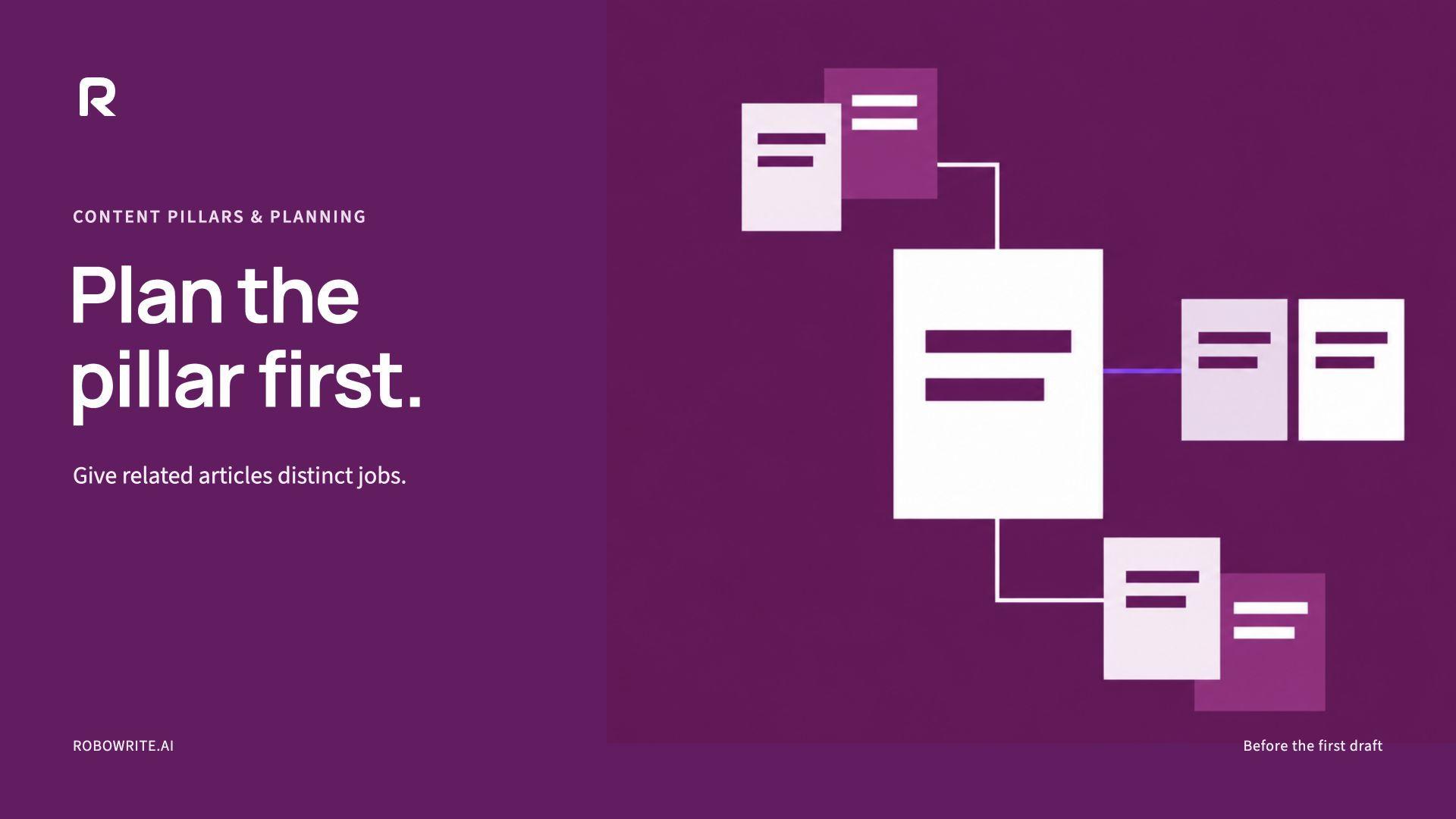
Content pillars give your content marketing a repeatable structure: choose a few topics your audience needs help with, create a useful hub for each one, and support every hub with focused articles. Instead of chasing disconnected post ideas, you build a
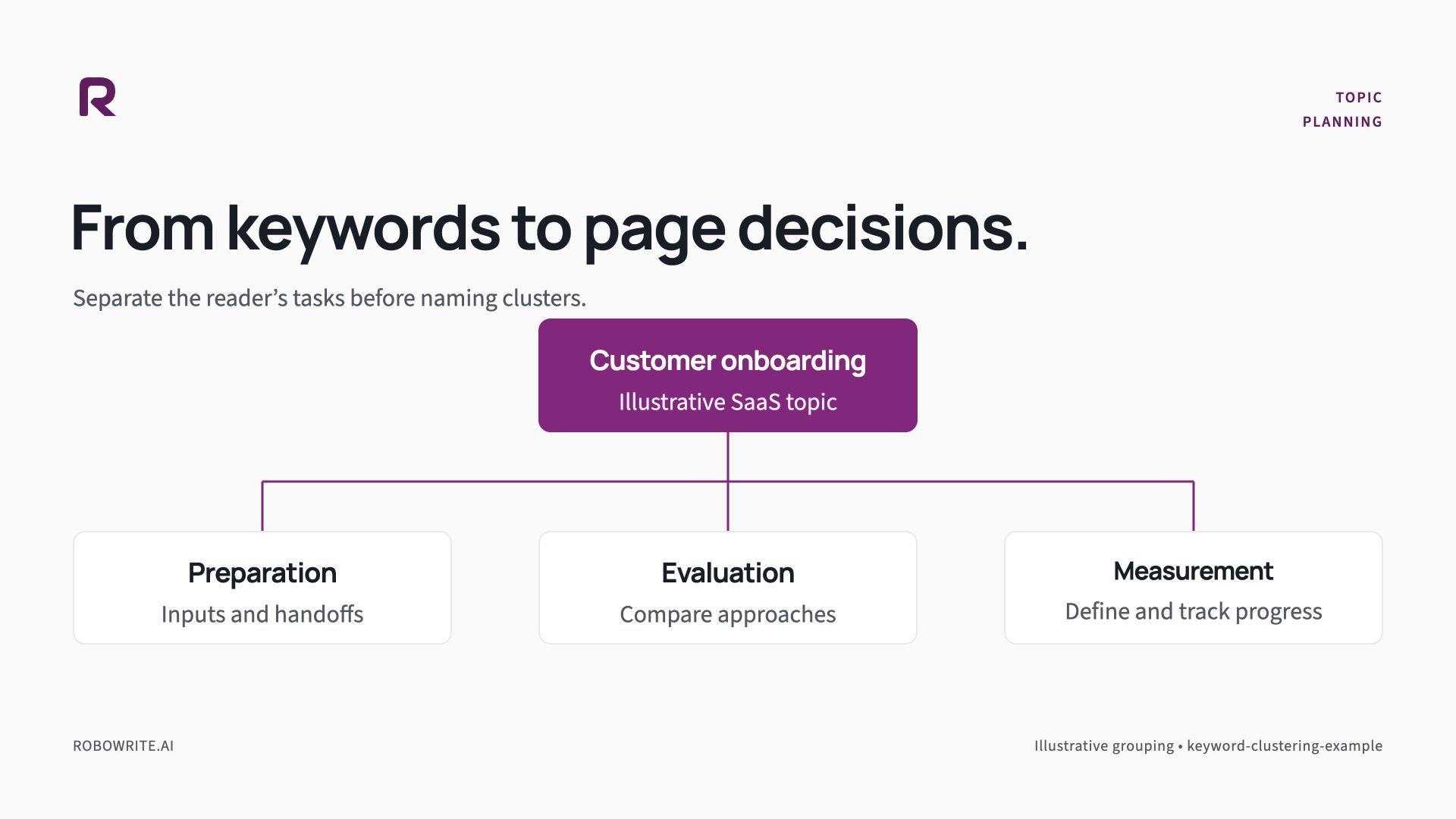
Understand keyword clusters and topic clusters with a SaaS example. Decide what belongs on one page, what needs another, and how the pages should connect.
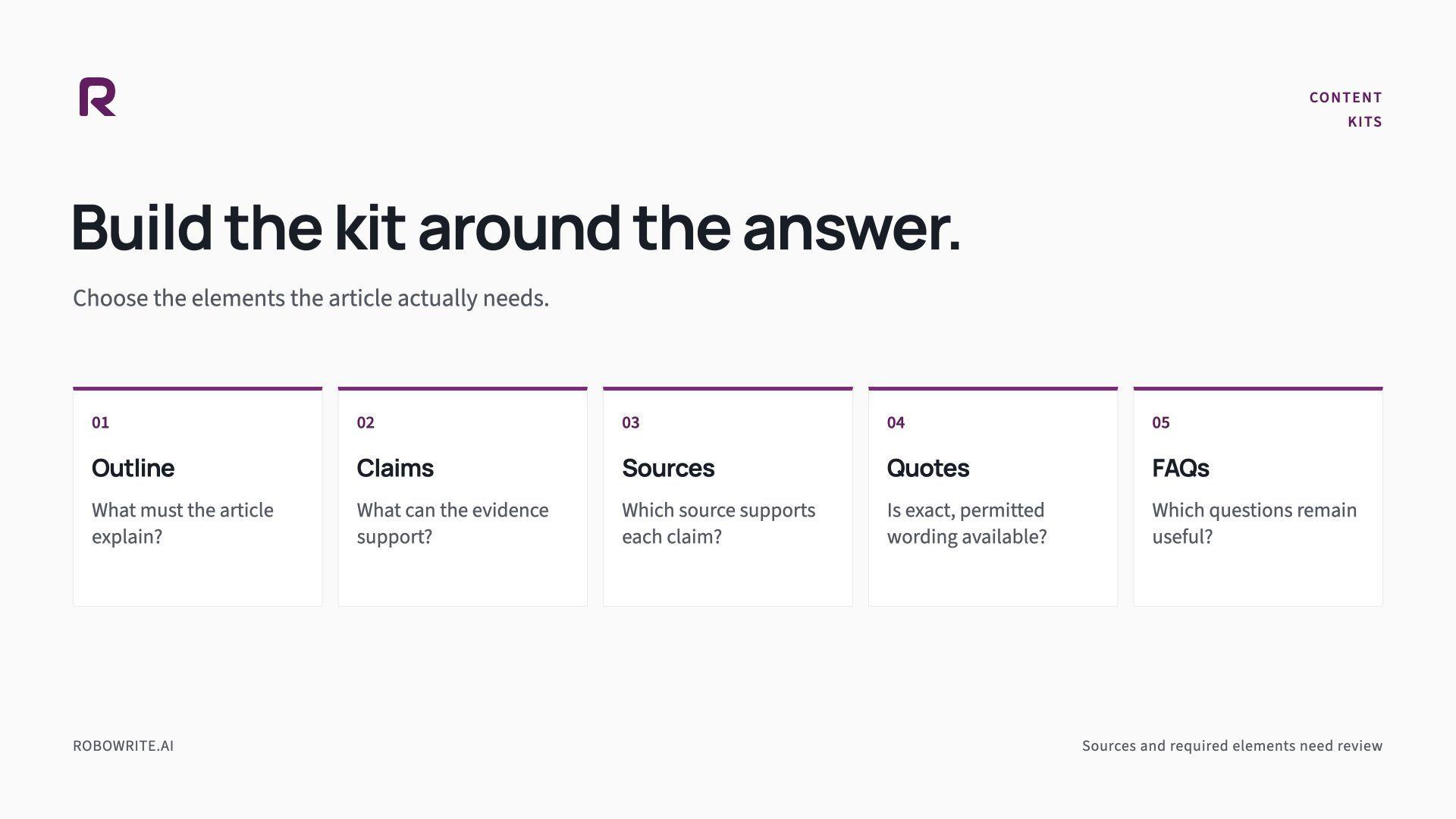
Turn a written SEO brief into Content Kit requirements. Separate coverage, facts, sources, quotes, FAQs, and review decisions before drafting.

Build a B2B SaaS content calendar with a copyable template, a worked weekly example, keyword clusters, Content Kits, and clear review owners.
Run a SaaS content audit with a copyable worksheet, worked page decisions, and a clear process for choosing what to keep, refresh, or rewrite.
Follow a practical keyword clustering example for SaaS content. Group related questions, separate intent, review overlaps, and choose an article brief.

A b2b content marketing strategy helps you publish useful SEO content on a predictable schedule without treating every article as a one-off project. For a small team, business owner, or freelance marketer, the practical goal is simple: choose topics that