

Briefs & Drafting
SEO Content Brief Template: A Worked SaaS Example
Copy an SEO content brief template with a worked SaaS example. Set reader intent, coverage, sources, exclusions, article elements, and review criteria.
Write briefs that give human and AI writers a clear audience, evidence, scope and acceptance criteria. Turn approved research into a useful first draft.
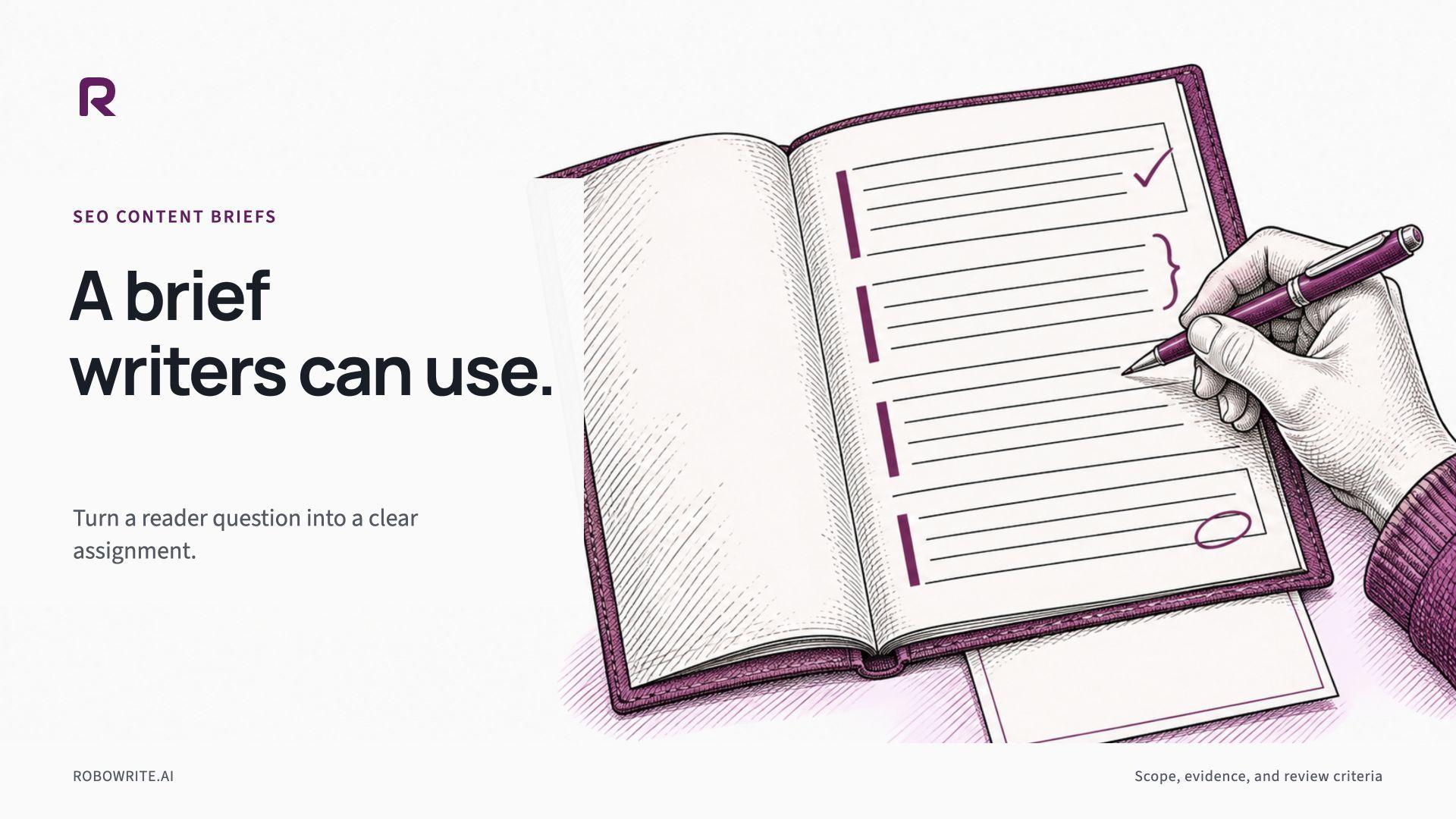
A brief is the agreement between the person commissioning a page and the person or system drafting it. It should explain what the reader needs to accomplish, what the page must establish and which claims require evidence. A keyword and a requested length leave most of those decisions unresolved.
Begin with a one-sentence outcome: “After reading, an agency account manager can define a client approval deadline and an escalation path.” Name what the reader already knows and what is outside scope. This keeps the draft from expanding into a generic explanation of every related topic.
| Brief field | Illustrative approval-guide entry |
|---|---|
| Audience | Account manager coordinating a client editor |
| Decision | Who can approve the final version? |
| Required evidence | Current workflow and an anonymized approval example |
| Must include | Ownership table, overdue-review rule, release check |
| Must avoid | Promised turnaround times without agreement |
| Acceptance | A reader can assign each stage without a follow-up call |
Separate confirmed facts from proposed examples. Mark invented examples as illustrative, and remove private client information before including any source material. A source list is useful only when the writer can tell which claim each source supports.
Write the direct answer first, then the steps, decision points and exceptions. Add a worked example where a reader would otherwise have to invent the missing details. Use headings that describe those tasks rather than repeating the target phrase in every section.
If AI helps produce the first draft, supply the approved brief and permitted references. Ask it to identify missing evidence instead of filling gaps with plausible numbers, customer quotes or feature promises. Keep uncertainty visible in the working draft until an owner resolves it; do not quietly convert a suggestion into a factual statement.
Check the draft's substance before its style. Does it answer the assigned question? Are the instructions usable? Can the factual claims be traced to the supplied evidence? Does the suggested next step follow naturally from what the reader learned?
When a draft fails those checks, revise the structure or gather missing information before spending time on sentence-level polish. Return recurring omissions to the brief template so the next assignment starts with better inputs. Once the draft meets the brief, send it through the separate editorial and publication workflow.
Take one approved topic and complete the example fields above. Use the related guides below when you need a repeatable briefing format or a practical drafting sequence.
An outline describes the sequence of sections. A brief also defines the reader, intended outcome, evidence, exclusions and acceptance criteria that make those sections useful.
Remove or mark the claim, verify it against an appropriate source and check nearby claims for the same failure. Update the brief or source instructions before generating another version.
For the broader workflow, explore AI Content Creation.
Copy an SEO content brief template with a worked SaaS example. Set reader intent, coverage, sources, exclusions, article elements, and review criteria.
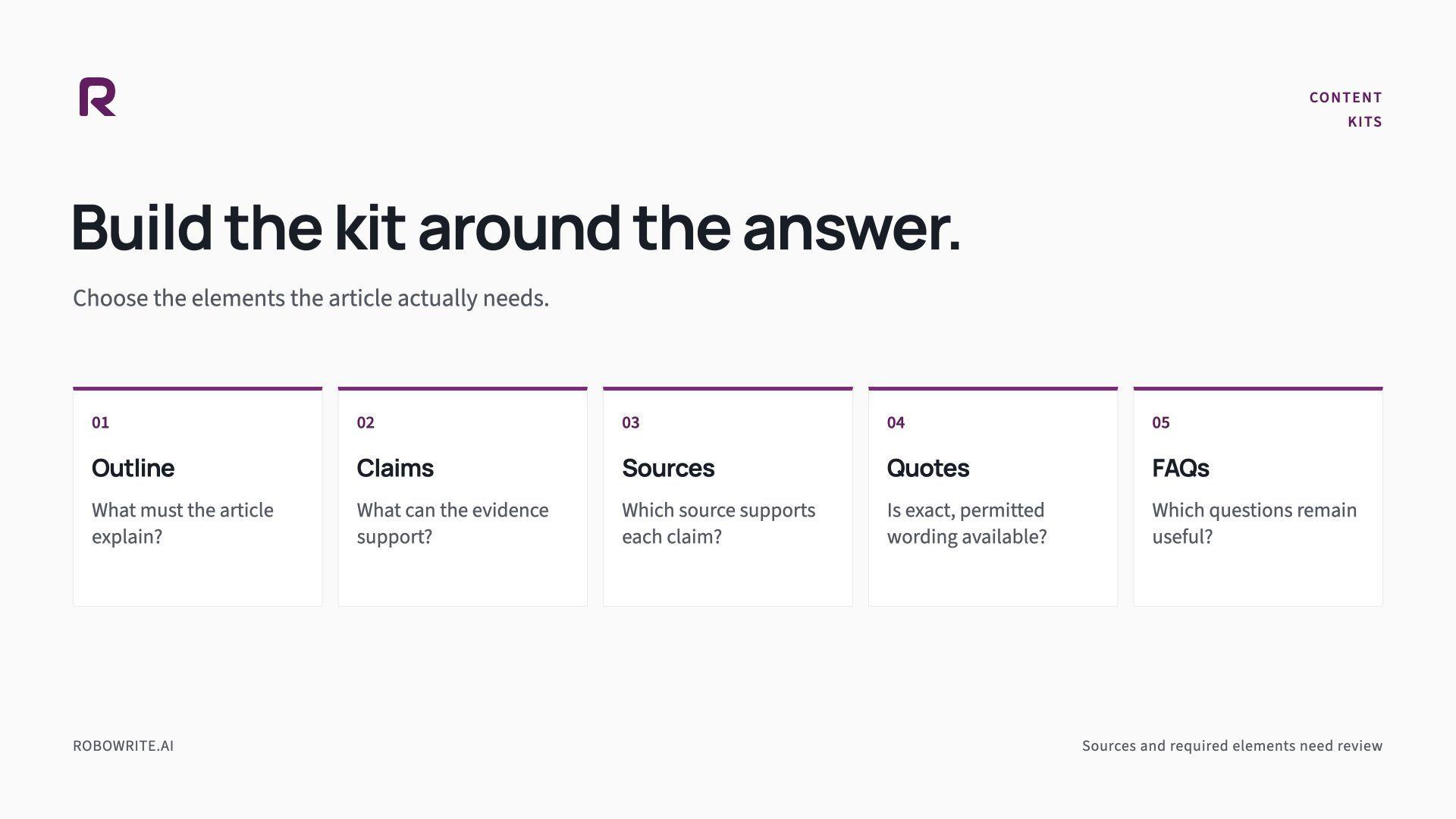
Turn a written SEO brief into Content Kit requirements. Separate coverage, facts, sources, quotes, FAQs, and review decisions before drafting.
Choose useful quotes, sources, and FAQs for a Content Kit. Work through evidence, attribution, required elements, and missing-source review decisions.

A short blog post works best when it answers one clear question. Five hundred words is a useful editing constraint for a focused topic; it is not a search-ranking requirement. If the reader needs a detailed comparison or a complex procedure, choose a longer format.

A portfolio page should help a prospective client recognize a problem you can solve. Screenshots alone rarely explain the assignment, your role or the result. Build each project page around the decision a buyer needs to make: is this team a credible fit for my work?